What Is Demonology? A Historical Overview
Demonology is the systematic study of demons or beliefs about demons. In an esoteric and historical context, it examines the origins, hierarchies, and classifications of non-human spirits. Traditionally, it traces how these entities transitioned from ancient protective spirits to the malevolent figures found in medieval grimoires and modern spiritual psychology.
What is the Historical Origin of Demonology?
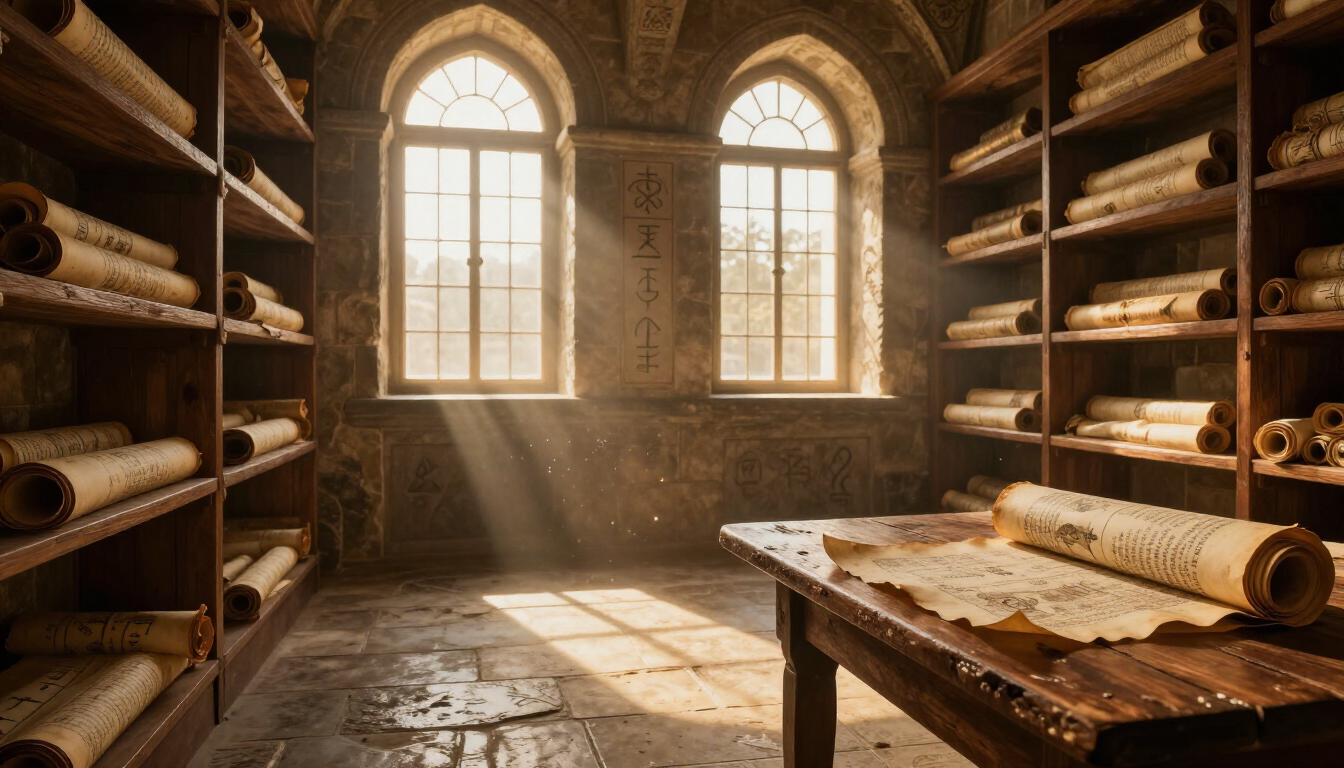
The roots of what is demonology today can be found in the fertile soil of ancient Mesopotamia. Long before the term existed in a Christian context, cultures in Sumer, Akkad, and Babylon recognized a complex world of spirits that inhabited the spaces between the human and the divine. These entities were not always viewed as purely "evil" in the modern sense; instead, they were often seen as forces of nature or agents of divine justice.
In these early civilizations, demonology was essentially a form of spiritual medicine and defense. If a person fell ill or suffered misfortune, it was often attributed to a specific spirit or "demon." Priests known as āšipu would perform exorcisms and rituals to appease or banish these beings.
Notable Entities in Ancient Mesopotamian Thought:
Pazuzu : A king of the wind demons who, despite his terrifying appearance, was often invoked to protect pregnant women from other malevolent spirits.
Lamashtu : A female demon believed to prey on unborn or newborn infants, representing the high infant mortality rates of the era.
The Utukku : A group of seven spirits that could be either helpful or harmful depending on the ritual context.
This early period established the foundation for categorizing the unseen. It wasn’t just about fear; it was about understanding the laws of the spiritual universe and how humanity could navigate them through ritual, symbolism, and spiritual guidance. If you are looking to explore your own spiritual path, our Home Page offers a gateway to resources that bridge ancient wisdom with modern insight.
Defining the Transition from Daimon to Demon
A critical turning point in the history of demonology occurred in Ancient Greece. The word "demon" actually derives from the Greek daimōn , which referred to a tutelary spirit or a lesser divinity. Socrates famously spoke of his daimōn as a guiding inner voice that provided him with moral and spiritual direction. In this context, a daimōn was an intermediate being—neither wholly god nor wholly man—that acted as a bridge between the physical and spiritual realms.

However, as the Hellenistic world merged with emerging monotheistic traditions, the neutrality of the daimōn began to shift. The Early Church Fathers, seeking to distinguish Christian theology from pagan practices, reclassified all pagan deities and spirits as "demons." This semantic shift transformed the benevolent or neutral guiding spirit into a strictly malevolent agent of temptation and corruption. This period represents the "great hardening" of demonological thought, where the complexity of the ancient spiritual landscape was funneled into a binary of good versus evil.
How Did Demonology Change During the Middle Ages?
The Middle Ages transformed demonology into a formal academic and theological discipline. During this era, the study was no longer just about folk beliefs; it became a rigorous attempt to map the "City of Dis." Scholastic theologians like Thomas Aquinas spent considerable time debating the physics of demons—how they moved, how they influenced the human mind, and whether they had bodies made of "condensed air."
This was also the era of the infamous Malleus Maleficarum (The Hammer of Witches), published in 1486. This text, while primarily focused on witchcraft, served as a foundational document for medieval demonology. It categorized the various ways spirits could interact with the physical world and provided a legal and theological framework for identifying "demonic influence."
Key Concepts of Medieval Demonological Thought:
- The Hierarchy : The idea that the demonic realm mirrored the celestial hierarchy of angels.
- Pacts : The belief that humans could enter into formal contracts with spirits to gain knowledge or power.
- Obsession vs. Possession : The distinction between a spirit influencing a person from the outside (obsession) versus inhabiting the body (possession).
- Spiritual Warfare : The view that every human soul was a battlefield between angelic and demonic forces.
For those interested in how these historical concepts influence modern spiritual readings and Blog content, understanding the medieval framework is essential for grasping the weight of Western esoteric tradition.
The Rise of the Renaissance Grimoire Tradition
As the Renaissance dawned, the dark, fearful demonology of the Middle Ages met the intellectual curiosity of Humanism. This gave birth to the "grimoire tradition." Scholars and occultists began to compile massive volumes that cataloged spirits not merely to fear them, but to command them. This was the era of "Solomonic Magic," based on the legend that King Solomon used a magical ring to bind spirits and force them to build the Temple in Jerusalem.

The most famous of these texts is the Lemegeton , or The Lesser Key of Solomon . Within its pages lies the Ars Goetia , which lists 72 spirits, their ranks (Kings, Dukes, Presidents), and the specific sigils required to summon and constrain them. This era treated demonology as a form of celestial science. To the Renaissance magus, a demon was a potential source of ancient knowledge, hidden treasures, or mechanical secrets—provided the practitioner had the spiritual fortitude and technical skill to control them.
Why is Demonology Important in Comparative Religion?
Studying demonology through the lens of comparative religion reveals that nearly every culture has a category for the "unruly spirit." In Japanese folklore, the Oni and Yōkai represent various aspects of the human condition and the natural world. In Islamic tradition, the Jinn are beings made of "smokeless fire" who possess free will, capable of being either righteous or mischievous.
By comparing these traditions, we see that demonology often serves as a cultural mirror. The attributes assigned to demons frequently reflect the specific fears and taboos of a society. In eras of plague, demons are associated with pestilence; in eras of political instability, they are associated with rebellion and chaos. Understanding what is demonology in a global context allows us to see the shared human experience of grappling with the unknown and the "other."
Psychological Archetypes in Modern Esotericism
In the 20th and 21st centuries, demonology underwent its most radical transformation yet: the move from the external to the internal. With the advent of Jungian psychology, many practitioners of esotericism began to view demons not as literal entities living in a subterranean hell, but as archetypes of the "Shadow Self."
Carl Jung proposed that the things we suppress or deny about ourselves—our rage, our greed, our hidden desires—don't disappear. Instead, they take on a life of their own in the subconscious. When we don't acknowledge our shadow, it "possesses" our behavior, leading to self-sabotage. In this light, the ancient rituals of exorcism can be seen as early forms of psychotherapy, and the study of demonology becomes a map of the human psyche's darkest corners.
At LUNARCANUM , we often view these historical symbols as tools for self-discovery. By understanding the "demons" of our past or the shadows in our charts, we can integrate these parts of ourselves and move toward wholeness.
How Can We Understand Demonology Today?
Modern demonology is a tapestry woven from historical theology, occult practice, and psychological insight. It serves as a reminder that the human fascination with the unseen is as old as civilization itself. Whether viewed as literal spirits, cultural metaphors, or psychological archetypes, these entities continue to haunt our stories and our spiritual practices.
Key Takeaways for the Spiritual Seeker:
- Context Matters : The definition of a "demon" has changed from a neutral guiding spirit to a malevolent force and finally to a psychological archetype.
- Historical Continuity : Modern occultism still relies heavily on Renaissance grimoires and medieval hierarchies.
- Symbolic Language : Demons often represent the "unprocessed" aspects of the human experience—fear, trauma, and shadow.
- Cultural Reflections : Every culture uses demonology to define its boundaries of morality and normalcy.
- Personal Transformation : Confronting the "demonic" is often a prerequisite for spiritual growth and integration.
In conclusion, demonology is far more than a collection of scary stories or dark rituals. It is a profound historical overview of how humanity has attempted to categorize the chaotic, the frightening, and the hidden. By looking back at the evolution of these beliefs, we gain a clearer understanding of our own spiritual landscape and the enduring power of the symbols that reside within it. If you have questions about how these concepts relate to your personal journey, please feel free to Contact us for guidance.
This historical journey through the world of spirits shows us that we are never truly alone in our struggle to understand the dark. From the clay tablets of Babylon to the digital pages of a spiritual blog, the study of demonology remains a vital, if misunderstood, pillar of human inquiry into the great mysteries of existence.
Recent Posts