7 Ancient Spiritual Texts for Esoteric Students
Ancient spiritual texts are foundational manuscripts containing the hidden wisdom of previous civilizations, providing the philosophical framework for modern occult practices. These sacred works, such as the Corpus Hermeticum and the Upanishads , offer timeless insights into universal laws, spiritual evolution, and the connection between the human soul and the divine.
Why are ancient spiritual texts important for esoteric students?
For the modern seeker, engaging with ancient spiritual texts is not merely an academic exercise; it is a transformative rite of passage. These documents serve as a bridge between the physical and metaphysical realms, preserving the oral traditions of mystery schools that existed long before the printed word. By studying these original sources, a student of the esoteric can strip away modern biases and connect with the raw, potent archetypes that govern the subconscious mind.
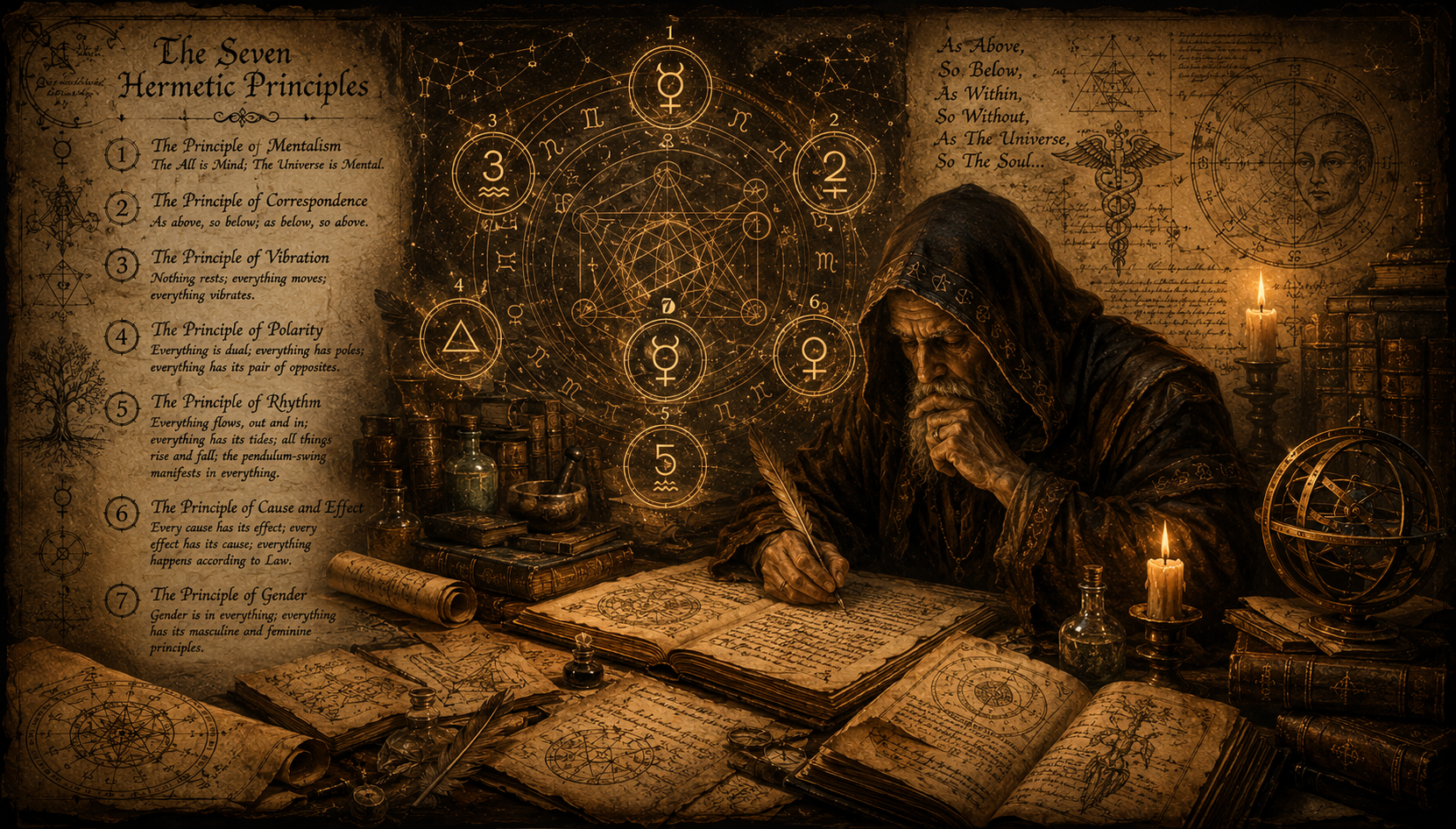
When you explore these manuscripts, you are participating in a lineage of seekers that spans millennia. This connection to the past provides a stable foundation for your current practices, whether you are performing tarot readings or analyzing a natal chart. Understanding the roots of spiritual concepts like the "Seven Hermetic Principles" or the nature of the Atman allows for a more profound application of energy work and manifestation. Without this historical context, modern spirituality can sometimes lack the depth required for true personal transformation.
Benefits of studying primary esoteric sources:
- Establishes a direct connection to ancient mystery school lineages.
- Provides the philosophical context for symbols used in divination.
- Helps discern universal truths from modern cultural additions.
- Enhances the practitioner's ability to decode complex archetypes.
- Strengthens the mental discipline required for advanced spiritual work.
At LUNARCANUM, we believe that education is the first step toward empowerment. Our blog frequently explores how these ancient concepts can be integrated into daily life, helping you move beyond surface-level rituals into a deeper state of self-discovery. By grounding your practice in established wisdom, you create a more resonant and effective spiritual path.
The Hermetic Tradition and the Corpus Hermeticum
Central to the Western esoteric tradition is the Corpus Hermeticum , a collection of Greek and Latin dialogues attributed to Hermes Trismegistus. This legendary figure—a syncretism of the Greek god Hermes and the Egyptian god Thoth—is considered the father of alchemy and the primary source of Hermetic philosophy. These texts were rediscovered during the Renaissance and sparked a renewed interest in the connection between man and the cosmos, influencing figures like Leonardo da Vinci and Isaac Newton.
In the Corpus Hermeticum , the core message is that the universe is a mental construction and that the human soul is a divine spark capable of regaining its original status through knowledge ( gnosis ). It introduces the concept of the Nous , or the Divine Mind, and explains how we can align our personal will with the universal will. This is the origin of the famous phrase "As above, so below," which is the cornerstone of astrology and correspondence theory.
Key Hermetic concepts found in the texts:
- The All is Mind; the Universe is Mental.
- The Principle of Correspondence between planes of existence.
- The Principle of Vibration; nothing rests, everything moves.
- The Principle of Polarity; everything is dual.
- The Principle of Cause and Effect; every cause has its effect.
Another essential text in this category is The Kybalion , published in 1908. While it is much younger than the original Hermetic dialogues, it serves as a distilled and accessible guide to the Hermetic laws. For a student at LUNARCANUM, mastering these seven principles is akin to learning the alphabet of the universe. Once you understand the rules of vibration and rhythm, you can begin to influence your reality through manifestation and energy work more effectively.
What are the most influential Gnostic and Alchemical texts?
Beyond Hermeticism, the Gnostic gospels offer a different, often more radical perspective on the soul's journey. The Nag Hammadi Library, discovered in Egypt in 1945, contains texts like the Gospel of Thomas and the Secret Book of John . These writings suggest that the material world was created by a lesser, ignorant deity (the Demiurge) and that our goal is to escape the cycle of physical suffering by awakening the divine light within us.
This "inner spark" philosophy is crucial for students of personal transformation. It shifts the focus from external worship to internal revelation. In the context of our work at LUNARCANUM, Gnosticism reminds us that clarity and guidance come from within, often facilitated by symbols and divination tools that speak to the subconscious soul. Alchemical texts, such as the Emerald Tablet and The Mutus Liber , use the metaphor of turning lead into gold to describe this same process of spiritual refinement.
Essential Gnostic and Alchemical manuscripts:
- The Emerald Tablet : The foundational document of alchemy.
- The Gospel of Mary Magdalene : An exploration of the feminine divine.
- The Pistis Sophia : A complex Gnostic text regarding the fall and redemption.
- Splendor Solis : A visually stunning alchemical manuscript.
- The Secret Book of John : A detailed Gnostic cosmology.
Alchemy is not merely about chemistry; it is about the transmutation of the self. By reading these ancient spiritual texts, you begin to see that the challenges you face in life are the "prima materia" or the raw material for your own spiritual gold. This perspective is empowering, as it views every transition and opportunity as a necessary step in the soul's evolution. If you are interested in learning more about our approach to this alchemy of the soul, you can visit our About page to see our mission statement.
Eastern Esotericism and the Wisdom of the Void
No esoteric education is complete without acknowledging the profound contributions of Eastern spiritual texts. The Upanishads , which are the concluding part of the Vedas , explore the nature of reality and the self ( Atman ). They introduce the concept of Brahman , the ultimate, formless reality that underlies all things. This monistic view—that all is one—complements the Hermetic mentalism of the West and provides a balanced worldview for the global seeker.
Similarly, the Tao Te Ching by Lao Tzu offers wisdom on living in harmony with the Tao , or the Way. Its emphasis on balance, non-action ( wu wei ), and the power of the feminine (the