
Luciferianism vs. Satanism: 5 Key Differences
Luciferianism and Satanism are distinct spiritual paths within the Left-Hand Path tradition. While both emphasize individualism and self-sovereignty, Luciferianism focuses on the pursuit of enlightenment, balance, and the "Morning Star" as a symbol of wisdom, whereas Satanism often highlights rebellion against dogma, earthly indulgence, and the archetype of the adversary.
What is the difference between Luciferianism and Satanism?
To understand the primary differences between Luciferianism and Satanism, one must look at the central figures and the underlying motivations of each path. In the broadest sense, Luciferianism is a quest for the light of knowledge (Gnosis), while Satanism is often a response to or a rejection of restrictive social and religious structures.
Luciferians typically view Lucifer not as a personification of evil, but as the "Light Bringer" or the "Morning Star." This figure represents the promethean spirit—the drive to seek forbidden knowledge and to elevate the self through intellect and discipline. The goal is often spiritual transcendence or the realization of one's own divinity. In contrast, Satanism—particularly the LaVeyan or atheistic variety—views Satan as an archetype of man’s carnal nature. It celebrates the ego, physical pleasure, and the necessary rebellion against herd mentality.
Key differences include:
- Focus: Luciferianism focuses on spiritual ascension and enlightenment; Satanism focuses on carnal reality and social rebellion.
- Archetype: Lucifer is the bringer of light; Satan is the adversary or the accuser.
- Aesthetics: Luciferianism often adopts a more refined, "higher-vibrational" aesthetic; Satanism frequently utilizes "darker" or more provocative imagery to challenge taboos.
- View of the Self: Luciferians seek to become like gods through wisdom; Satanists seek to be their own masters through the fulfillment of desire.
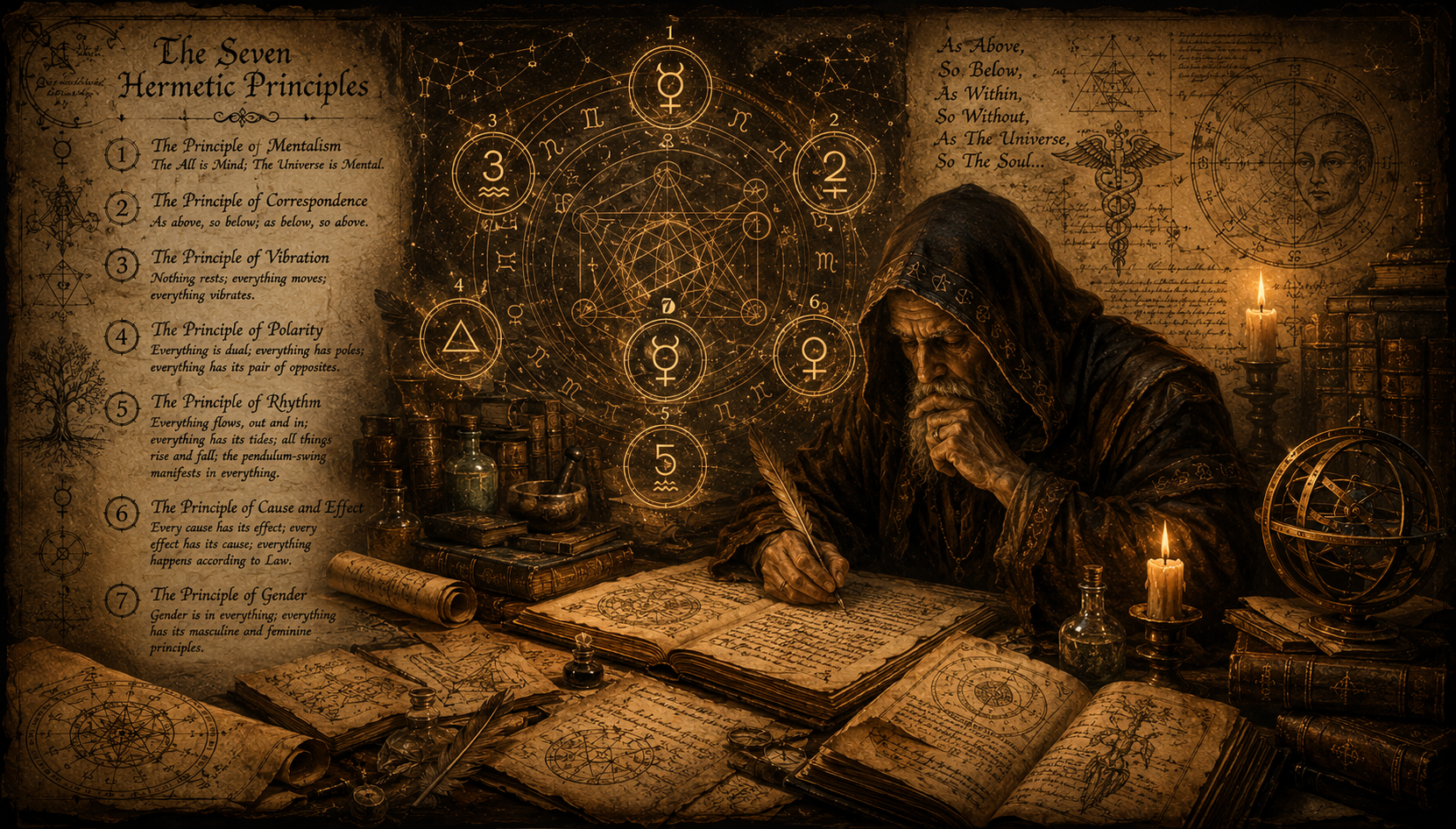
- Historical Roots: Luciferianism draws heavily from Gnosticism and Hermeticism; modern Satanism is largely a 20th-century development rooted in individualism and skepticism.
Exploring these nuances is essential for anyone interested in the blog content here at LUNARCANUM, as we dive deep into the symbolism that shapes modern esoteric thought.
Is Luciferianism the same as Satanism?
No, Luciferianism is not the same as Satanism, although they are frequently conflated by the general public and mainstream religious institutions. The confusion arises because both traditions utilize figures that appear in Judeo-Christian mythology as antagonists. However, the interpretation of these figures differs significantly between the two paths.
Luciferianism can be thought of as a philosophy of "self-mastery through light." It is often more contemplative and philosophical, sharing more DNA with ancient mystery schools than with modern reactionary movements. Many Luciferians do not identify as Satanists at all, seeing the Satanic path as too focused on the shadows or the material world.
Satanism, on the other hand, is a philosophy of "self-mastery through shadow." It embraces the parts of the human experience that society often labels as "dark" or "sinful," such as pride, lust, and anger, and seeks to integrate them into a powerful, self-directed life. While a Satanist might acknowledge the Luciferian impulse for knowledge, they are more likely to prioritize the active, adversarial role of the rebel.

Core Philosophies of the Left-Hand Path
Both Luciferianism and Satanism belong to what is known as the Left-Hand Path (LHP). In the occult world, the LHP is defined by self-deification, the rejection of external moral codes in favor of personal ethics, and the pursuit of individual power and autonomy. This is contrasted with the Right-Hand Path, which emphasizes submission to a higher power, community, and the dissolution of the ego.
Within the LHP, the philosophy of Luciferianism is often described as "Theistic" or "Atheistic" depending on the practitioner. Some view Lucifer as a literal entity, while others see him as a symbol of human potential. Regardless of the stance, the core philosophy remains the same: the universe is a place for the individual to explore, master, and eventually transcend. This aligns with many of the manifestation resources we offer at LUNARCANUM, which focus on reclaiming one's power to shape reality.
Satanic philosophy, particularly as defined by the Church of Satan or the Satanic Temple, is often more sociopolitical or psychological. It uses the figure of Satan to represent a philosophy of "rational self-interest." It encourages people to live for the here and now, to be kind to those who deserve it, and to destroy (metaphorically) those who cross them. It is a philosophy of vital existence rather than spiritual longing.
How do Luciferian and Satanic rituals differ?
Ritual practice in these two traditions reflects their differing goals. For the Luciferian, ritual is a tool for mental and spiritual refinement. It is often performed in a space that feels sacred, clean, and elevated. The goal of a Luciferian ritual might be to gain insight into a difficult problem, to commune with the higher self, or to celebrate a personal milestone in one's evolution.
Satanic rituals, especially in the LaVeyan tradition, are often described as "intellectual decompression." They are theatrical and designed to release suppressed emotions. A Satanic ritual might involve the use of "blasphemous" imagery specifically to break the psychological chains of a religious upbringing. It is cathartic and grounding, rather than transcendental.
Common ritual elements include:
- Luciferian: Use of white or gold candles, meditations on the Sun or Venus, and invocations of wisdom.
- Satanic: Use of black candles, the inverted pentagram, and "the destruction ritual" to purge anger.
- Both: Emphasis on the individual as the center of the ritual space and the use of personal willpower.
Symbolism and Archetypes in Both Traditions
Symbolism is the language of the occult, and both paths use it to communicate complex psychological truths. In Luciferianism, the most prominent symbol is the Sigil of Lucifer or the Morning Star (the planet Venus). It represents the light that shines in the darkness, the first spark of consciousness. Many Luciferians also utilize the image of the dragon or the phoenix, representing transformation and the shedding of the old self.
Satanism is most famously associated with the Sigil of Baphomet—an inverted pentagram containing the head of a goat. This symbol represents the earthly, carnal nature of man and the rejection of spiritual "heavens" in favor of the physical world. It is a symbol of balance between the animalistic and the intellectual.

Do Luciferians and Satanists worship a literal devil?
The answer to this question is complex because neither community is a monolith. However, for the vast majority of modern practitioners, the answer is no. Most modern Satanists are atheists or agnostics who use the name "Satan" as a metaphor for their own ego and rebellion against authority. They do not believe in a literal hell or a horned beast that collects souls.
Luciferians are more varied. Some are "Theistic Luciferians" who believe in Lucifer as a real spiritual force or an ancient deity (often linked to Prometheus or Enki). Others are "Archetypal Luciferians" who view him as a powerful psychological template. Even theistic Luciferians rarely view their deity as "The Devil" of Christian theology. To them, the Christian "Devil" is a caricature, while Lucifer is a majestic and misunderstood figure of liberation.
If you are interested in exploring these archetypes further, our About Us page details our commitment to providing clear, unbiased information on all spiritual paths. Understanding the difference between a literal deity and a psychological archetype is a cornerstone of advanced spiritual practice.
The Role of Ethics in Modern Occultism
A common misconception is that because these paths are "Left-Hand," they are inherently amoral or "evil." In reality, both Luciferianism and Satanism place a high premium on personal ethics. Because they do not follow a set of commandments from a higher power, the responsibility for ethical behavior falls entirely on the individual.
Satanists often follow the "Eleven Satanic Rules of the Earth," which emphasize respecting others' boundaries and only using force if one is attacked first. Luciferians often live by a code of "Self-Sovereignty," which mandates that one must not only seek knowledge but also act with the dignity and wisdom of a god. In both cases, the goal is to live a life of integrity, where one's actions align with their personal values.
Choosing a Path for Personal Transformation
For those at a crossroads in their spiritual journey, deciding between these paths—or simply learning from them—requires deep self-reflection.
- Choose Luciferianism if: You are driven by a thirst for knowledge, you feel a connection to the celestial and the refined, and you want to focus on "leveling up" your consciousness.
- Choose Satanism if: You feel a need to reclaim your power from society, you value the physical and material world above all else, and you find strength in the role of the outsider.
At LUNARCANUM, we believe that every path has something to teach us. Whether you are interested in tarot readings to uncover your subconscious or seeking guidance on your next steps, we are here to support your journey. You can contact us at any time to discuss how our digital resources can aid your transformation.
Summary of Key Takeaways
Understanding the distinction between Luciferianism and Satanism is vital for any serious student of the esoteric. While they share a common lineage in the Left-Hand Path, their goals and methods are quite different. Luciferianism is a path of light, seeking to illuminate the self through wisdom and discipline. Satanism is a path of the earth, seeking to empower the self through the integration of the shadow and the celebration of the ego.
- Luciferianism seeks enlightenment and self-deification.
- Satanism seeks autonomy and carnal fulfillment.
- Both reject external dogma in favor of individual will.
- Neither typically involves the worship of a literal "evil" entity.
- Both require a high degree of personal responsibility and ethical discipline.
Recent Posts